
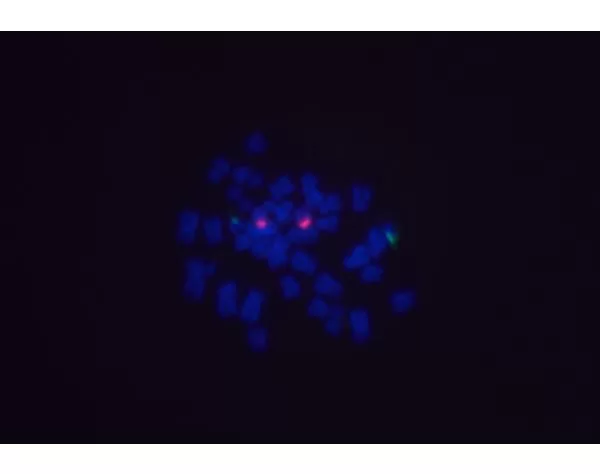
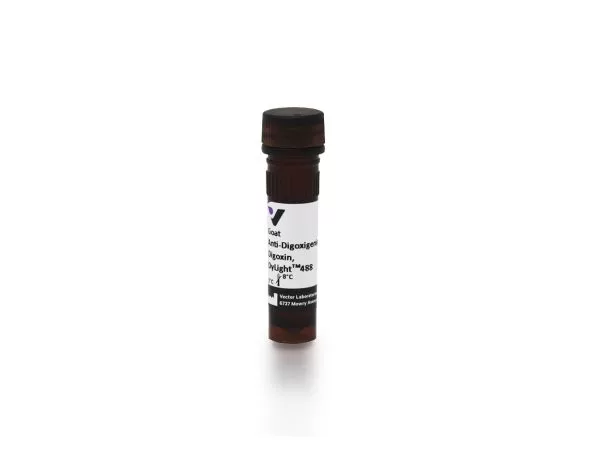
Digoxigenin (DIG) is a small plant-derived molecule not found in animals. DIG is used to label nucleic acid probes for applications such as in situ hybridization. DIG-labeled probes are detected with antibodies specifically directed against the DIG label. We have generated high affinity and highly purified antibodies for this purpose. The DyLight™ conjugated antibodies allow a one-step fluorescent visualization of DIG-labeled probes.
| Unit Size | 0.5 mg |
|---|---|
| Applications | In situ hybridization |
| Concentration | 1.0 mg active conjugate/ml |
| Recommended Storage | 2-8 °C |
| Solution | 10 mM HEPES, 0.15 M NaCl, pH 7.8, 0.08% sodium azide. |
| Maximum Emission | 518 nm |
| Maximum Excitation | 493 nm |
| Recommended Usage | The recommended concentration range for use is 5-20 µg/ml. |
| Detection Target | Digoxigenin/Digoxin (DIG) |
| Conjugate | DyLight 488 |
| Color of Fluorescence | Green |
| Host Species | Goat |
| Format | Concentrate |
DyLight™ dyes offer several advantages including greater photostability, pH independence and brighter fluorescence. DyLight™ conjugates are completely stable from pH 4 to pH 9, making them compatible with many buffers and diluents.

